Ring Bling
About this project
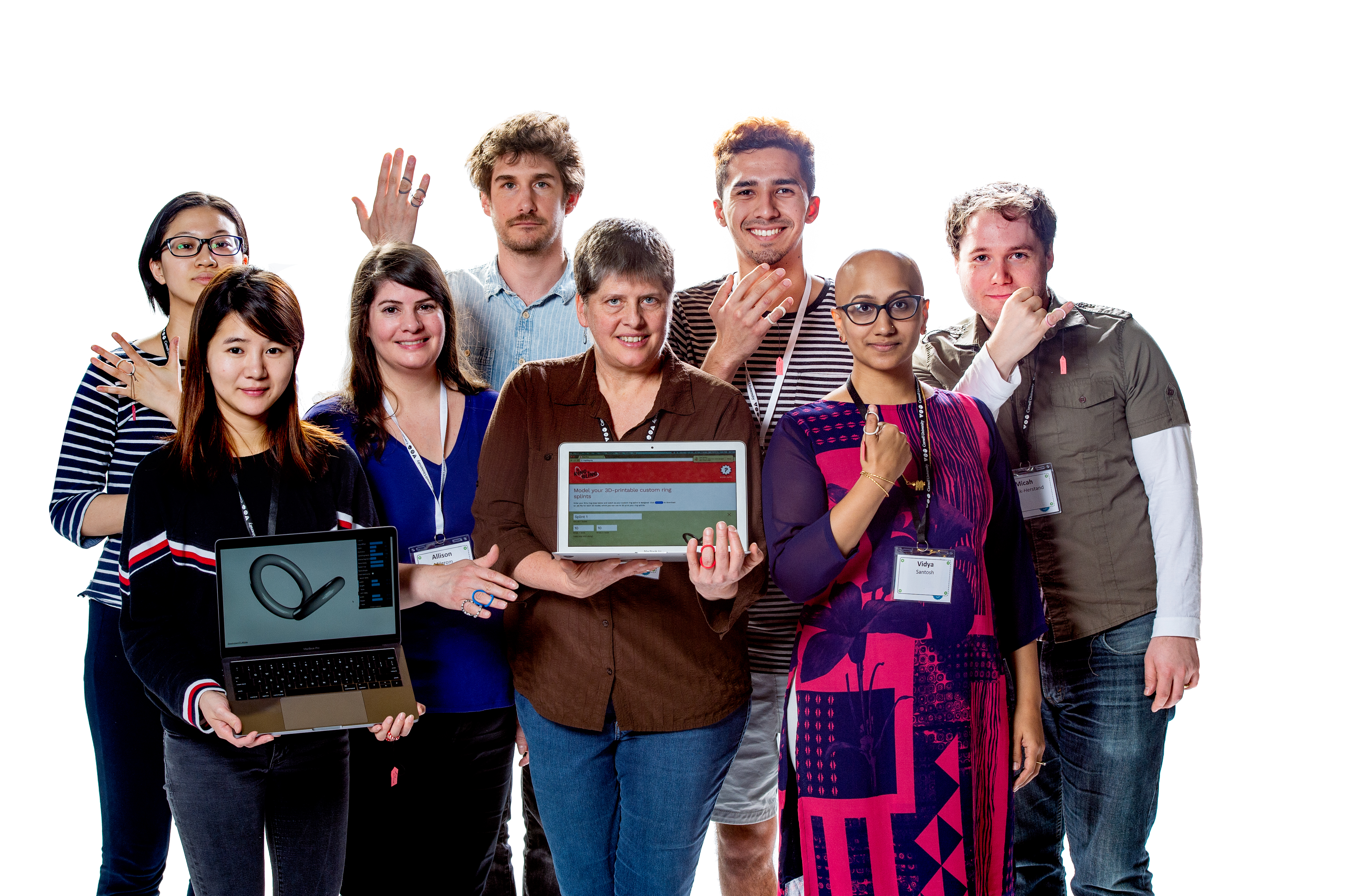
Team Ring Bling worked with their need-knowers--a team of specialists from Blythedale Children’s Hospital--to create a digital platform allowing physical therapists to customize and 3D print ring splints within a hospital setting. After inputting a patient’s measurements into the newly createdRingBling.org, the therapist can then take the file with the specifications and 3D print customized ring splints with a range of materials, colors and designs.
The challenge
Many of the children with whom she works have hyperextending fingers. These children wear ring splints to prevent their fingers from hyperextending. However, these ring splints are either expensive, non-customizable, don’t fit well, and only come in one color. Julie believes that 3D printing can provide the solution. When fingers are held in better alignment, children have better use of their hands. Ring splints, which are small, plastic orthotics that hold fingers to improve alignment, are commercially available, though stock sizes often do not fit children appropriately or require multiple fittings. Stronger, custom silver splints are also overly expensive. The challenge was to develop a platform to design and produce affordable ring splints in custom sizes, colors and shapes.
Who it helps
Julie is an occupational therapist who works with children at Blythedale Hospital for children with disabilities. Julie has worked with children with disabilities and hand splinting for over 30 years. She has seen improvements in the variety of materials and colors available for many types of splints but options for finger ring splints continue to be problematic.
Project details
- Stage: Concept
- Built by the Cornell University community, Ithaca, New York, United States of America
- Team: Julie
- Category: Therapy
- 14 downloads
The build files for Ring Bling are free to download from this page - open source, shared by TOM: Tikkun Olam Makers.
Related projects
- Hoai
- Child Car Seat Aid
- Independent and Modified Pediatric Feeding Solutions
- Interact switch
- Dice Box 2.0
- Ring Book Holder
Browse all TOM projects · Search projects · TOM communities · Makeathons and events